Four Week Course
Returning to God: A Theology of Repentance
COURSE DETAILS
November 16 - December 7, 2026
Monday Nights | 6:30 - 8:00
Tuition is $100
Instructor: Dr. Joel Willitts
Course Description
What does it mean to repent, and what kind of life does repentance invite us to live? This four-week course explores repentance through Jewish Scripture and the diverse writings of ancient Judaism, including the New Testament. We will examine why God calls people to repentance, what repentance involves, and how it finds expression in the concrete circumstances of human life. Along the way, we will consider the relationship between repentance, forgiveness, and restoration.
This course combines biblical and theological study with personal reflection and group discussion. Participants will read selected texts before each session and use a course journal to record their observations, questions, and reflections. Together, we will investigate the texts and consider how the biblical call to repentance addresses our own lives, relationships, and communities.
Weekly Studies
Week 1 — The Call to Repent
Why does God call people to repentance?
We begin by examining the circumstances that give rise to the biblical call to repentance. Through Jewish Scripture and ancient Jewish writings, we will explore how human wrongdoing, unfaithfulness, and broken relationships become occasions for God's summons to repent. We will also consider how individuals and communities recognize their need for repentance.
Week 2 — The Meaning of Repentance
What does repentance involve?
What does it actually mean to repent? We will investigate how Jewish Scripture and ancient Jewish writers, including the authors of the New Testament, understand turning toward God, confession, remorse, and changed allegiance. Our discussion will consider what distinguishes genuine repentance from regret or sorrow over consequences.
Week 3 — The Life of Repentance
What does repentance look like in embodied human life?
Repentance concerns the way we live with God and others. Through prophetic texts and ancient Jewish teachings, including those of Jesus and the apostles, we will explore how repentance takes shape in our relationships, economic conduct, treatment of others, and responsibilities within communities. We will consider what repentance requires of us as embodied persons whose lives are inseparable from the social world we inhabit.
Week 4 — Repentance and Restoration
What kind of life does repentance make possible?
Our final session examines the relationship between repentance, divine mercy, forgiveness, and restoration. Drawing together the theological insights of the course, we will consider how God makes renewed life possible and what restoration might mean when the consequences of wrongdoing remain. We will conclude by reflecting on the possibilities and responsibilities of personal and corporate repentance.
Course Preparation
Participants are encouraged to read the selected passages before each session and keep a journal throughout the course. The journal will serve as a working companion for recording observations, wrestling with questions, preparing for discussion, and reflecting on the implications of repentance for personal and communal life. Participants will be invited to share their insights and questions in class, while personal reflections may remain private.
Recommended Companion Book: Mark J. Boda, Return to Me: A Biblical Theology of Repentance (IVP Academic, 2015).
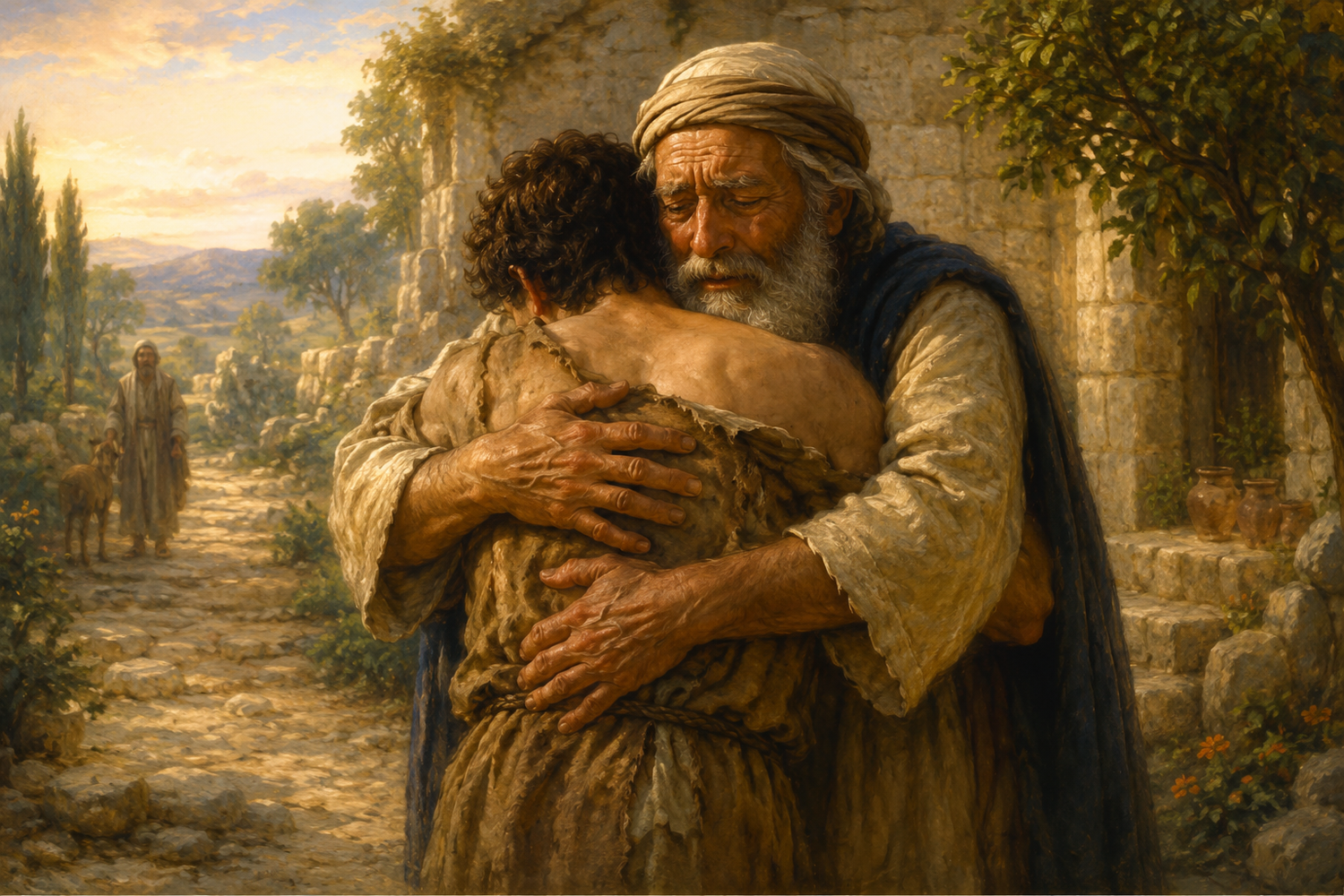
The Parable of the Prodigal Son
Luke 15:11-32
Registration