Part Two: “As Was His Custom:” What Did the Sabbath Mean to Jesus?
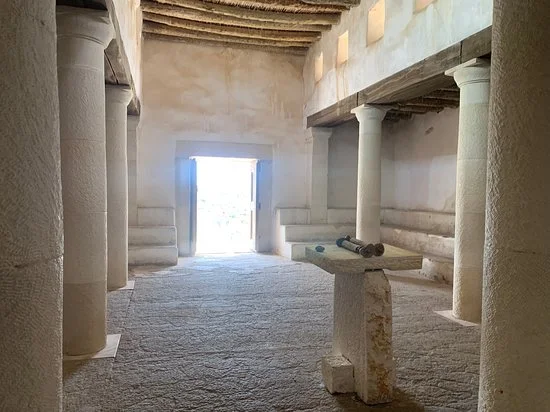
One Sabbath morning, Jesus entered the synagogue in Nazareth. Luke introduces the scene with a phrase that is easy to pass over: Jesus went to the synagogue “as was his custom.” Then he stood to read.
Someone handed him the scroll of Isaiah. Jesus found the passage about good news for the poor, freedom for captives, sight for the blind, and the year of the Lord’s favor. He read it aloud, returned the scroll to the attendant, and sat down. With every eye fixed on him, he said, “Today this scripture has been fulfilled in your hearing” (Luke 4:21).
We often remember what Jesus announced that day. Luke also wants us to notice where and when he announced it. Jesus entered a Jewish gathering on the Sabbath, opened one of Israel’s prophetic scrolls, and explained Israel’s hope to his neighbors. The synagogue, the Sabbath, and the words of Isaiah belonged to the world in which he lived.
A day that shaped Jewish life
Keeping the Sabbath was one of the Ten Commandments. Israel was commanded to set apart the seventh day and cease from ordinary work (Exodus 20:8–11; Deuteronomy 5:12–15). From sundown to sundown, families rested and Jews gathered to hear Scripture and pray. The day recalled God’s rest after creation and Israel’s release from slavery in Egypt. Scripture also describes the Sabbath as a sign of God’s covenant with Israel (Exodus 31:13–17).
Observing the Sabbath meant living according to Jewish law and participating in Jewish ethnic society—the shared life of Israel’s people. It joined Jews to Israel’s God, Israel’s Torah, Israel’s ancestral customs, and Israel’s collective memory. The Sabbath gave this shared life a rhythm that returned every seventh day.
When Luke says that Jesus went to the synagogue “as was his custom,” he shows Jesus living within this Jewish pattern. Jesus kept the sacred time commanded in the Torah, joined his neighbors in the synagogue, heard Israel’s Scriptures, and took his place among those who interpreted them. The Gospels then show him participating in Jewish arguments about what faithful Sabbath observance required.
A walk through the grainfields
Mark tells of Jesus and his disciples walking through grainfields on the Sabbath (Mark 2:23–28). As they walked, the disciples plucked heads of grain. Some Pharisees asked why they were doing what was unlawful on the Sabbath.
Their question belonged to a larger Jewish conversation. The Torah commanded Israel to cease from work on the seventh day. Daily life continually raised practical questions: What counted as work? What could someone do when hungry? When did meeting a human need honor the Sabbath, and when did it violate the command?
These were questions of faithful practice. Scholars often call such discussions halakhic debates—arguments about how people should walk in the way commanded by Torah. Jesus’ answer joins that debate. He recalls how David ate the bread of the Presence when he and his companions were hungry. Then he declares, “The Sabbath was made for humankind, and not humankind for the Sabbath” (Mark 2:27). Jesus did not break the Sabbath. He interpreted what was considered work on the Sabbath, something the Torah did not define. The Pharisees had a different answer to the question of what was considered work.
Jesus speaks of the Sabbath as God’s gift. It serves life. His final statement presses the claim further: “The Son of Man is lord even of the Sabbath.” Jesus claims the authority to say what the Sabbath is for and what faithful Sabbath practice requires.
A man in the synagogue
The argument continues in another synagogue, where a man has a withered hand (Mark 3:1–6). People watch to see whether Jesus will heal him on the Sabbath. Jesus calls the man forward and asks, “Is it lawful to do good or to do harm on the Sabbath, to save life or to kill?”
No one answers. Jesus tells the man to stretch out his hand, and the hand is restored. Jesus makes his interpretation visible by restoring a damaged hand in front of the gathered community. For him, doing good and restoring life display what the Sabbath is for.
The Pharisees’ concern grows from a conviction Jesus shares with them: the Torah orders Israel’s life. Their disagreement reveals how seriously Jewish teachers could argue about its practice. Jesus participates in that argument while making an extraordinary claim about his own authority.
Seeing Jesus within the argument
Jesus’ Jewishness appears in his attendance at the synagogue, his reading of Isaiah, his observance of the Sabbath, and his arguments over its meaning. The disputes themselves locate him within Jewish life. He takes part in one of its most characteristic activities: reading Torah and deciding how its commands should shape ordinary life.
This changes the way we hear the Sabbath controversies. We see a Jewish teacher arguing from Israel’s Scriptures, addressing Jewish questions, healing within a Jewish gathering, and calling Israel to understand the Sabbath through God’s desire to give life.
“As was his custom” opens a window onto the life Jesus actually lived. The Sabbath was woven into his worship, his teaching, his disputes, and his mission.
The next Dispatch will carry this question onto the mountain, where Jesus says, “You have heard that it was said . . . but I say to you.” What was Jesus doing with the Torah there?