Final Dispatch: Why It Matters Today
For the past eight Dispatches, I've been exploring a question: Does Jesus' Jewishness matter more than we realize?
We've considered Jesus' birth as a Jewish child, his Sabbath observance, his interpretation of the Jewish Torah, his mission to the lost sheep of Israel, his crucifixion as King of the Jews, and the continuing Jewish identity of his first followers after his resurrection. I've tried to show that Jesus' Jewishness was fundamental to who he was, what he taught, and what he did.
But that leaves a question I have not yet addressed directly. Does Jesus' Jewishness matter for Christians today? And if so, how?
I think it matters in at least three ways: in how we think about Jesus, in how we tell the gospel, and in how we live as his followers.
In Our Thinking About Jesus: Christology
Christians confess that God became human in Jesus. But have we given sufficient thought to what that means?
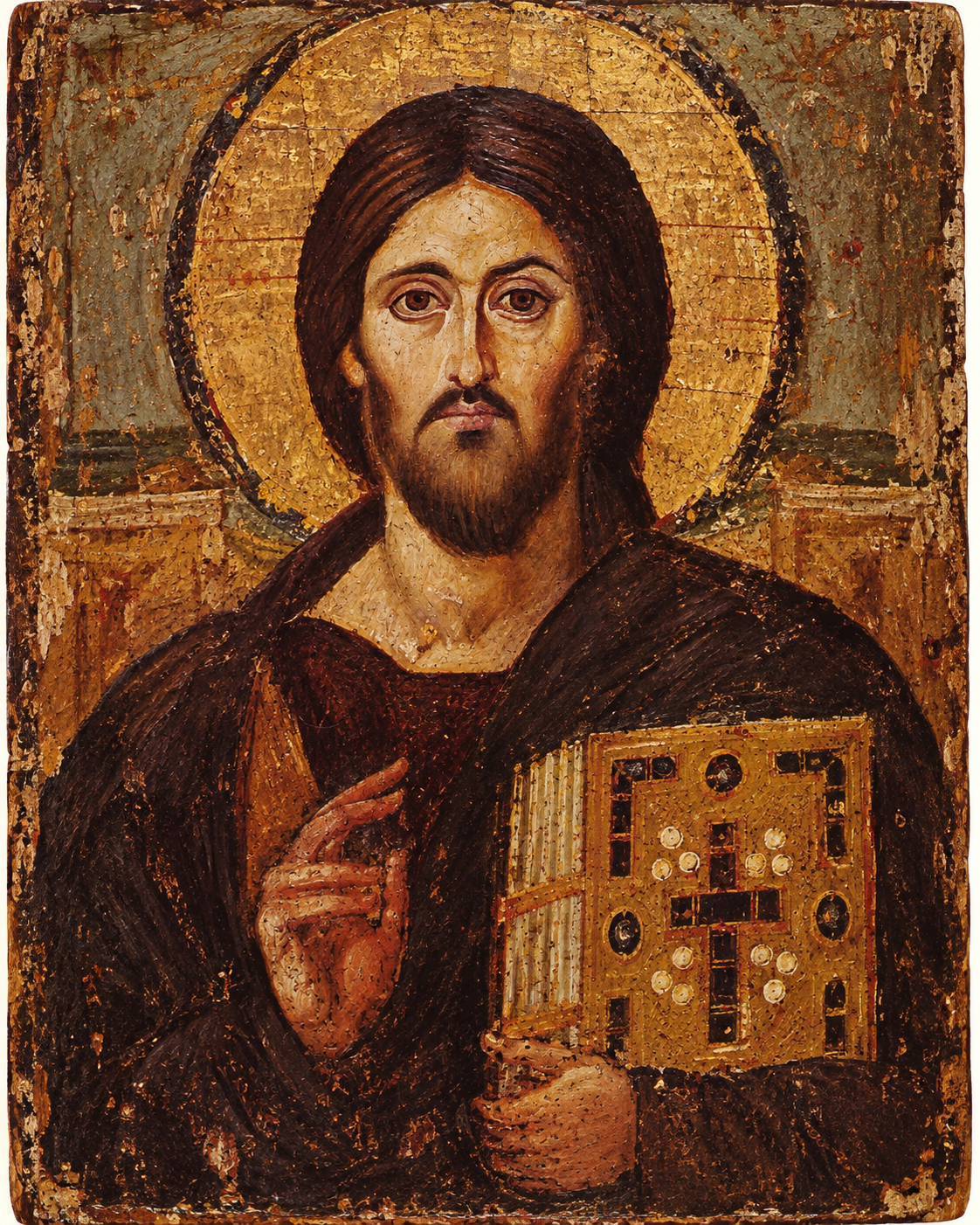
God did not become a generic human being. Jesus was not some white marble sculpture representing humanity in general, free of gender, ethnicity, culture, or history. He was a Jewish man. He was born into a particular people, shaped by their Scriptures, traditions, hopes, and history.
Jesus' humanity goes all the way down. It includes his gender, his ethnicity, and his place within the Jewish society of the first century. These were not incidental features added to an otherwise complete humanity. They belonged to the human being he was.
We rightly confess that Jesus was fully human. But I wonder whether our understanding of his humanity is too abstract. Christian theology has spent centuries considering what Jesus shares with all human beings. Yet no human being exists simply as an instance of humanity in general. We are particular persons, with particular histories, relationships, and communities. Our humanity cannot be separated from these things.
Neither can Jesus' humanity.
The humanity of God is a Jewish man.
Consider what follows from this. When Christians speak of the incarnation, we are confessing that God revealed himself in this particular human being. If Jesus could just as easily have been born into any people, in any place, at any time, without anything of significance changing in our understanding of him, have we really taken his humanity seriously?
And Jesus did not cease to be this Jewish man when God raised him from the dead. The risen Lord whom Christians worship is the same Jewish Jesus who lived, taught, and was crucified under Pontius Pilate. His resurrection did not erase his history or replace his identity with some generic, universal humanity.
Jesus is the resurrected Jew.
This should place some constraints on our Christology. We cannot properly understand the humanity of Jesus while treating his Jewishness as dispensable historical background. Nor can we separate the risen Christ of Christian faith from the Jewish Jesus of history. They are one and the same person.
I wonder what our theological reflection on Jesus would look like if we began with this conviction and allowed it to shape our understanding of the incarnation. What would change if the Jewishness of Jesus were considered fundamental to our account of his humanity?
In Our Telling of the Gospel: Proclamation
This second consideration may be the most challenging.
Think about the way Christians commonly present the gospel. Many of us are familiar with the Four Spiritual Laws, the Bridge Illustration, or some similar approach. We begin with the human problem of sin and separation from God. Jesus enters the story as God's solution. Through his death and resurrection, forgiveness and salvation become available to those who repent and believe.
The presentation is effective in its simplicity. It identifies the problem, explains God's solution, and invites a response. But it also raises a question that I think deserves considerably more attention.
Where are the Jews?
It is remarkable that Christians can tell the gospel without mentioning the Jewish people at all. We can move from Genesis 3 to Romans 3, from the fall of humanity to the universal problem of sin, without ever telling the story that lies between them.
Even when Jesus is identified as the Messiah, the title often functions as a generic religious designation. We rarely stop to consider that Messiah is a Jewish title, carrying the hopes of a particular people. Jesus becomes the answer to the universal human problem of sin, while his Jewish identity recedes into the background.
Messiah becomes a category, not a Jewish person.
Matthew opens his Gospel by introducing Jesus as the son of David and the son of Abraham (Matthew 1:1). These are not simply theological titles. They locate Jesus within the history of the Jewish people. The one whose story Matthew is about to tell is a Jewish man whose identity is inseparable from that history.
What would happen to our telling of the gospel if we took that seriously?
I think one of our difficulties is that we have placed universality before particularity. We begin with the universal human problem and then introduce Jesus as its universal solution. His Jewishness becomes relevant chiefly because it establishes his credentials as the Messiah.
But the universal purposes of God move through a particular story.
God's intention to bless the nations took shape through his promises to Abraham and his descendants. Jesus was born into that people. He proclaimed the kingdom of God among them. His first followers were Jews who believed that God had raised their Messiah from the dead. When non-Jews began to believe in Jesus, they were welcomed into the blessings that God had promised through the Jewish people.
The story widened to include the nations.
This matters because the coming of Jesus did not bring the Jewish story to an end. I am sometimes uncomfortable with the familiar claim that Jesus "completed Israel's story." There is certainly a sense in which Jesus brings God's promises to their decisive realization. But completed in what sense? The language can suggest that the Jewish people have served their purpose. Jesus has arrived, and the Jewish story can now be left behind.
This is where supersessionism can enter our thinking almost unnoticed.
I would rather say that Jesus continues the Jewish story in a new and decisive way, opening its promised blessings to the nations. The Jews do not disappear from the story, nor do the Jews who follow Jesus cease to be Jews. God's purposes for the world are being advanced through the Jewish Messiah.
What would a gospel presentation shaped by this understanding sound like?
I am still working through that question. I do not think the answer is simply to add a few sentences about Abraham and David to our familiar presentations. We need to reconsider how we tell the story itself.
We would begin with God's good creation and the human rebellion that brought sin and death into the world. But we would then tell the story of God's promises to the Jewish people, including his intention to bless all the nations through them. We would introduce Jesus as the Jewish Messiah who announced God's kingdom, called people to repentance, and taught them how to live before God. We would proclaim his death for our sins and his resurrection as God's decisive victory over sin and death. We would announce that through him God offers forgiveness, the gift of his Spirit, and reconciliation to Jews and Gentiles alike. And we would invite people to repent, believe in Jesus, and follow him in anticipation of the final judgment, the resurrection of the dead, and the renewal of creation.
Sin, grace, forgiveness, faith, repentance, and salvation remain essential to the gospel. But their place within the story has changed.
The gospel is not simply the announcement that God has provided a solution to my individual problem of sin. It is the good news of what God has done, and continues to do, through the Jewish Messiah for the sake of the world. My forgiveness and salvation belong within that larger story.
There is more work to be done here. I recognize the value of a clear and concise gospel presentation. But I wonder how much of the gospel's own story we have sacrificed in the effort to make it simple.
The gospel is for everyone. But it is not a story without a people, a history, or an ethnic identity. Its universal invitation comes through a particular people and a particular Jewish man. And that particularity does not disappear when the invitation reaches the nations.
In Our Living: Discipleship
Finally, Jesus' Jewishness should matter for how we live.
Christians speak frequently about following Jesus. But what does it mean to follow a Jewish teacher whose understanding of life before God was shaped by the Torah?
Jesus' ethical teaching was an interpretation of the Jewish Torah. When he called people to love God and neighbor, to pursue justice and mercy, to forgive others, and to live faithfully before God, he was teaching his fellow Jews how to obey the God of Israel.
Consider the Sermon on the Mount. In Matthew 5, Jesus discusses murder, adultery, divorce, oaths, retaliation, and love for enemies. These are not disconnected moral principles. Jesus is interpreting the Torah. He is instructing his Jewish disciples in what faithfulness to God requires.
Christian ethics begins here, with the teaching of this Jewish man.
But what about Gentiles? Jesus' immediate audience was Jewish. His disciples were Jews. When non-Jews began to follow Jesus, the question arose whether they too were obligated to observe the Torah in the same way as Jews.
This was not a minor issue for the first followers of Jesus. It was one of the most pressing questions they faced.
Acts 15 gives us an important window into their deliberations. The apostles concluded that Gentiles did not need to become Jews to follow Jesus. They were not required to be circumcised and take on the full obligations of Jewish Torah observance. Nevertheless, James identified certain essential requirements for Gentile believers. Gentiles were not simply free to live as they pleased.
Paul maintained this distinction between Jews and Gentiles. He did not require Gentiles to become Jews. Neither did he require Jews to cease living as Jews. In 1 Corinthians 7:17–20, he instructed believers to remain in the condition in which they were called, whether circumcised or uncircumcised. What mattered, he said, was keeping God's commandments.
For Gentiles, Paul placed particular emphasis on love of neighbor and walking by the Spirit. But this was not a departure from the Torah. In Galatians 5:14, he writes that the whole law is fulfilled in the command to love one's neighbor as oneself. In Romans 13:8–10, he makes a similar argument, explicitly grounding love of neighbor in the commandments of the Torah.
This leads me to a conclusion that many Christians will find unfamiliar.
Both Jewish and Gentile followers of Jesus are called to Torah-shaped lives. But they are not called to observe the Torah in identical ways.
Jews do not cease being Jews when they follow Jesus. Gentiles do not become Jews when they follow him. Their obligations differ, but neither is released from the call to obey God. And for both, the Torah remains fundamental to understanding what that obedience entails.
I recognize that this raises substantial questions about the relationship between Christians and the Jewish law. Many Christians have been taught that Jesus abolished the law or that Paul's gospel freed believers from its obligations. I have come to question those assumptions, but the argument deserves more attention than I can give it here.
For now, I want to press a simpler point. If we are going to follow Jesus, we must take seriously the Jewish character of his teaching. We cannot extract a collection of universal moral principles from Jesus' words and then leave behind the Torah that gives them their meaning.
Nor should we imagine that discipleship is a second stage of Christian faith, something that follows after we have accepted Jesus as Savior.
Jesus called people to follow him. Faith and obedience belonged together.
To believe in Jesus is to follow him. And to follow him is to learn to live as he taught.
Does It Matter Today?
I began this series by asking whether Jesus' Jewishness matters more than we realize. I have become convinced that it does, and not simply because it helps us understand the New Testament more accurately.
Jesus' Jewishness belongs to the identity of the one Christians confess as Lord. It belongs to the story we proclaim as good news to the world. And it belongs to the life we are called to live as his followers.
These are not minor considerations. They touch some of the most fundamental convictions of Christian faith.
Taking Jesus' Jewishness seriously will not answer every theological question. In fact, it raises questions that Christians have often found easier to avoid. It calls us to reconsider familiar ways of thinking about Jesus, telling the gospel, and understanding discipleship.
My hope in writing these Dispatches has been to encourage precisely this kind of reconsideration. I have not tried to answer every question. I hope instead to have shown why Jesus' Jewishness deserves a more substantial place in Christian faith and practice.
We cannot simply acknowledge that Jesus was Jewish and then carry on thinking about him, proclaiming his gospel, and following his teaching as though that fact changes nothing.
If Jesus' Jewishness belongs to who he is, then it must matter for those who confess him as Lord.
I suspect we have only begun to consider what that might mean.