My Emerging Embodied Hermeneutic
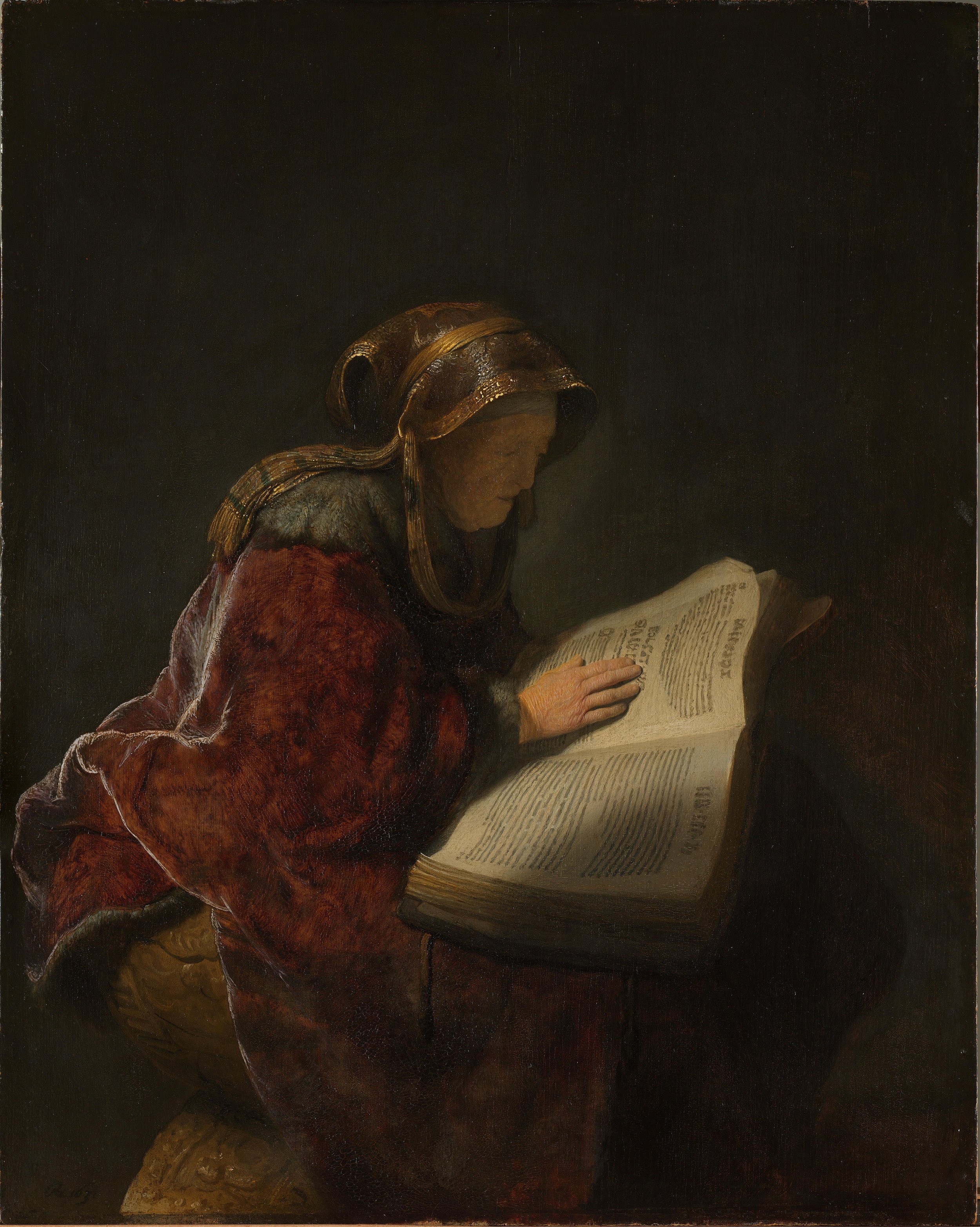
Rembrandt van Rijn, Old Woman Reading, Probably the Prophetess Anna (1631). Rijksmuseum, Amsterdam.
I was recently talking with someone about how I approach the Bible. I could say that I take historical context seriously, but that doesn't quite describe what I am trying to do. Many biblical scholars take historical context seriously. I am interested in something that goes a little deeper, and I have been trying to find the words for it.
When I read Scripture, I want to understand what its claims meant in the lives of the people who first encountered them. What kind of world did they inhabit? How did they understand their relationship to God and to other people? What could they have understood Jesus or the apostles to be asking of them? What would it have meant for them to act on what they heard?
These questions arise from a conviction about what it means to be human. We are irreducibly embodied. Our bodies are not containers for a more essential inner self. We become who we are in families and communities, through relationships, shared practices, inherited histories, and the places we inhabit. Our understanding of the world develops through living in it.
I think this matters enormously for reading the Bible.
In the Q&A after a recent lecture I gave on Ephesians 2, someone asked an important question: If Jesus abolished the holiness commandments that regulated access to the Temple, wouldn't that mean the Temple itself had become inoperative?
I understood the logic. Start with a theological conclusion about the commandments, then follow that conclusion to its implications for the early Jewish Messiah believers and the Temple. Within that framework, the answer may seem obvious.
But Acts 21 gives us a particular scene to consider. Paul returns to Jerusalem and meets with James and the elders. They tell him that thousands of Jewish believers are zealous for the Torah, but they have heard a troubling rumor. Paul is supposedly teaching Jews who live among Gentiles to abandon Moses, to stop circumcising their children, and to give up their ancestral customs (21:20–21).
James proposes a public response. Four men have taken vows, apparently Nazirite vows. Paul should join them in purification and pay their expenses so that they can shave their heads at the completion of their vows. These expenses would include the sacrifices prescribed for concluding such vows (Num 6:13–20). Luke reports that Paul follows the recommendation and enters the Temple with the men, where offerings are to be made (Acts 21:23–26). Earlier, Acts appears to associate Paul himself with a vow marked by cutting his hair (18:18), though the kind of vow is uncertain. James also reiterates the different requirements that had been established for Gentile believers (21:25).
The details matter. The concern in Jerusalem is what Paul's proclamation means for Jews living among Gentiles and for the practices through which they continue to live as Jews. James answers the rumor with an action that involves purification, vows, money, and Temple sacrifices. Paul participates.
What did the good news about Jesus mean to these people? How did they understand what had changed through Jesus' death and resurrection? How did they continue to inhabit their Jewish ethnic society.
Perhaps someone will argue that they had not yet worked out the full theological implications of what God had done in Christ. That is possible. That's what Augustine believed when he responded to Jerome in a letter in the early fifth century. The lives and practices of these people are evidence we must account for. I am reluctant to embrace a theological conclusion that leaves me unable to make sense of the human beings whom Scripture itself describes.
This leads directly to another concern in my work on Paul and Jewish ethnicity. Some interpretations of Paul hold that Jewish followers of Jesus were now free to decide whether to continue observing the Torah's distinguishing commandments. Circumcision, Sabbath, and food practices could remain part of their lives, but they were no longer obligations.
I want to know what that would mean for a Jewish family.
Think of parents raising children within Jewish society. Their household observes Sabbath. They eat in ways that distinguish them from surrounding peoples. They celebrate festivals, teach the Torah, and connect their children to Israel's story. These activities are among the ways Jewish peoplehood continues from one generation to the next. They belong to the social existence of a people.
If these practices become matters of personal preference, what happens to the community that depends upon them? How would Jewish believers understand such a proposal? What would they think it meant for their children and grandchildren? And does Paul actually ask this of them?
These questions cannot determine the answer in advance. The proclamation of Jesus could require profound changes in inherited patterns of life. But we have to understand the world being changed. We have to ask what a theological claim would mean if people actually lived according to it.
There is another side to this, and it concerns the interpreter.
Many Christians have no meaningful connections to Jewish communal life. They can learn the historical facts about circumcision, Sabbath, food practices, and festivals and still lack a certain common sense about what being Jewish means. They may have little experience of a community for whom the question of whether children and grandchildren will continue to be Jewish carries such weight.
I use common sense deliberately. We acquire it through the lives we live. Our families, churches, friendships, and communities teach us what seems natural, reasonable, and possible. We carry that knowledge into our interpretation of Scripture, often without realizing it.
In many Christian settings, religion is understood principally through personal belief and individual commitment. If a practice is no longer required, it can seem natural to regard it as a personal choice. But ancient Jewishness is not simply a religious preference, and while there are different kinds of Jews today, their "religious life" is rooted in the concept of ethnicity. It involves belonging to a people whose history and communal life extend across generations.
Here is the problem: the embodied life of the interpreter places limits on what the interpreter can imagine.
I include myself in this. My own social world has formed the questions that occur to me, the answers I find plausible, and even the things I fail to notice. Historical study can correct some of these limitations. Learning from living Jewish communities can also expose assumptions I bring to ancient Jewish texts, although contemporary Jewish life is not identical to Jewish life in the first century. I need both historical discipline and the willingness to recognize where my own common sense is inadequate.
This concern extends well beyond questions about Paul or the New Testament. In Deuteronomy 6, Israel is told to speak of God's commandments with its children, at home and on the road, when lying down and rising up. The passage speaks about love for God, and it places that love within the daily practices through which a people forms its children. The future of Israel is bound up with what families do from one generation to the next.
This is what I mean by reading Scripture with an embodied understanding of human life. When God speaks, human beings hear and respond from within lives already shaped by relationships, obligations, practices, and histories. Their reception of God's word is part of that lived reality. The word may challenge and transform their world, but it is received by people who inhabit one.
There is a similar challenge for me as a reader. I cannot step outside my own social existence to approach the Bible as a detached mind. I can, however, learn to question the assumptions that make one interpretation feel obvious and another almost unimaginable.
So when I study a passage, I want to follow its theological claims into the actual lives of the people involved. I want to ask what they could have heard, what they could have understood, and what living in response would have required of them. I also want to know what my own experience might be preventing me from seeing.
I am still working out the philosophical and theological implications of this approach--it is actually a project I'm working on. But it already shapes the way I read the Bible.
I want interpretations that take seriously the human beings to whom God speaks—and I want to remain aware of the ways my own embodied life shapes what I am able to hear.