Part Five: Who Are the “Lost Sheep of the House of Israel”?
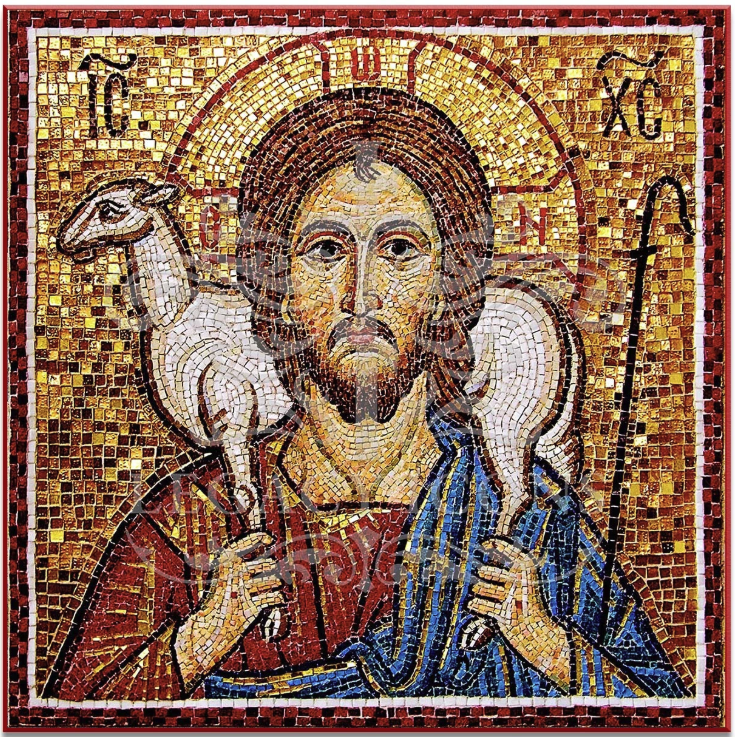
Does Jesus’ Jewishness Matter More Than We Realize?
There is a saying of Jesus in Matthew that Christians often read without quite knowing what to do with it. When Jesus sends out the twelve disciples, he gives them a surprisingly restrictive command: “Do not go among the Gentiles or enter any town of the Samaritans. Go rather to the lost sheep of the house of Israel” (Matthew 10:5–6).
A few chapters later, when a Gentile woman approaches Jesus asking him to heal her daughter, Jesus says something equally striking: “I was sent only to the lost sheep of the house of Israel” (Matthew 15:24).
The obvious question is: Who are the “lost sheep of the house of Israel”?
That question has occupied me for much of my scholarly life. My doctoral research at Cambridge eventually became a book titled Matthew’s Messianic Shepherd-King: In Search of “The Lost Sheep of the House of Israel.” The more I studied the phrase, the more convinced I became that we cannot understand it simply as a general description of sinful or spiritually lost people.
Matthew’s lost sheep have a history. They have a geography. And they belong to Israel’s hope for restoration.
More Than a Metaphor for Lost People
Christians naturally hear the language of “lost sheep” and think of people who are spiritually lost. There is nothing wrong with that association. Jesus certainly calls sinners to repentance and repeatedly seeks people who are alienated, vulnerable, or excluded.
But in Matthew, the expression is much more specific. Jesus does not simply say that he has come for “lost sheep.” He says he has come for “the lost sheep of the house of Israel.” That phrase points us toward Israel’s own story.
To understand it, we have to go backward before we can move forward.
Israel Had Once Been Divided
After the reign of Solomon, the kingdom divided. The southern kingdom became Judah, centered on Jerusalem, while the northern kingdom continued to be called Israel. In the eighth century BCE, the Assyrian Empire conquered that northern kingdom, and its political existence came to an end.
But the hope for Israel did not.
Israel’s prophets continued to imagine a future in which God would gather his scattered people, restore Israel, reunite the divided nation, and establish a faithful ruler over them. One of the clearest examples appears in Ezekiel 34. Israel’s leaders have failed. They have been bad shepherds, and the sheep are scattered. So God promises that he himself will search for his sheep, rescue them, gather them, and restore them.
Then comes a striking promise: God will place over them “one shepherd, my servant David.”
The language is unmistakably royal. The shepherd is a king, and the gathering of the sheep is part of the restoration of Israel. That combination—shepherd, David, scattered sheep, restoration—became part of Jewish expectation.
Matthew presents Jesus directly within that story.
Matthew Introduces Jesus as Israel’s Shepherd-King
Matthew begins his Gospel by calling Jesus “the Messiah, the son of David.” Then, in the story of Jesus’ birth, Matthew quotes the prophecy that a ruler will come from Bethlehem who will “shepherd my people Israel.”
That is not incidental language. Matthew is telling us from the beginning how to understand Jesus. He is the Davidic ruler. He is Israel’s shepherd.
Now move forward to Matthew 9. Jesus travels through the towns and villages, teaching, healing, and announcing the kingdom. When he sees the crowds, Matthew tells us that Jesus has compassion on them because they are “harassed and helpless, like sheep without a shepherd.”
Then, immediately afterward, Jesus commissions the Twelve and sends them to “the lost sheep of the house of Israel.”
The connection is difficult to miss. The sheep need a shepherd, and Matthew has already told us who the shepherd is.
So Who Are the Lost Sheep?
This is where the geography of Jesus’ ministry becomes important. Matthew places much of Jesus’ activity in Galilee and in the northern regions of the land. When Jesus begins his Galilean ministry, Matthew specifically names the territories of Zebulun and Naphtali.
Those names reach deep into Israel’s past. They were territories associated with the old northern kingdom—the Israel that had fallen to Assyria centuries earlier.
That geography matters.
I have argued that Matthew’s “lost sheep of the house of Israel” refers particularly to the Jewish population of Galilee and the northern regions associated with the former kingdom of Israel. They are not “lost” merely because they are individual sinners. They are the sheep of an Israel that had once been shattered and scattered.
Now the Davidic shepherd has appeared among them.
That makes Jesus’ Galilean ministry far more significant than it may first appear. It is not simply where Jesus happened to begin preaching. It is a sign that Israel’s restoration is beginning.
Why the Twelve Are Sent There
This also helps explain Jesus’ instructions in Matthew 10. He tells the Twelve not to go among the Gentiles and not to enter Samaritan towns. Instead, they are to go to the lost sheep of the house of Israel.
At first, those restrictions can sound uncomfortable to Christian readers. Why limit the mission? Why not go everywhere?
But the issue is not that Jesus has no concern for Gentiles. The issue is that he has a particular vocation as Israel’s Messiah. The shepherd must gather Israel. The Son of David has come to enact Israel’s promised restoration.
Only when we place Jesus inside that Jewish story does the command begin to make sense.
Then a Gentile Woman Appears
Matthew 15 makes the question even more interesting. Jesus enters the region of Tyre and Sidon, and a Canaanite woman cries out to him because her daughter is suffering. Notice how she addresses him: “Lord, Son of David, have mercy on me!”
A Gentile woman recognizes Israel’s Davidic Messiah.
Yet Jesus responds, “I was sent only to the lost sheep of the house of Israel.” Again, Jesus describes his mission in explicitly Israel-centered terms.
He is not saying that Gentiles have no place in God’s purposes. Matthew has already hinted otherwise. Gentile magi appear at Jesus’ birth. Jesus praises the faith of a Roman centurion. And by the end of the Gospel, the risen Jesus will send his disciples to “all nations.”
But Matthew does not arrive at the nations by skipping over Israel. The Messiah’s mission to Israel matters. In fact, Israel’s restoration is part of the way the nations are ultimately brought into the story.
The Canaanite woman stands almost at the boundary between those two movements. She is outside Israel, yet she recognizes Israel’s Messiah, and Jesus responds to her faith. The nations are already appearing at the edges of Israel’s restoration.
Why Jesus’ Jewishness Matters
This is precisely where Jesus’ Jewishness matters more than we sometimes realize. If we remove Jesus from Israel’s story, “lost sheep” becomes little more than a timeless religious metaphor: Jesus loves lost people.
That is true. But Matthew is saying considerably more.
Jesus understands himself within Israel’s Scriptures. He acts within Israel’s geography. He embodies Israel’s hopes. He appears as Israel’s promised Davidic shepherd. And his ministry announces that God is beginning to gather and restore his people.
That changes how we hear the phrase “the lost sheep of the house of Israel.”
The question is not merely, “Why did Jesus go to Jews first?” The more important question is: Who are the lost sheep?
Only from within that Jewish story can we fully understand the movement that eventually carries the message of Israel’s Messiah to the nations. Jesus’ universal mission does not bypass Israel. It grows out of Israel’s restoration.
And that leaves us with a question worth sitting with:
What if the restoration of Israel was not merely the prelude to Jesus’ mission, but part of what Jesus believed his mission actually was?