Part Six: Why Did Rome Crucify the “King of the Jews”?
The Passion Narratives
Jesus did not die between two ordinary thieves.
Matthew and Mark call the men crucified beside him lēstai—bandits or brigands. Josephus often uses this word for armed men operating in the dangerous world of resistance, violence, and revolt. We cannot know the precise charges against these two men, but Rome did not crucify people for petty theft.
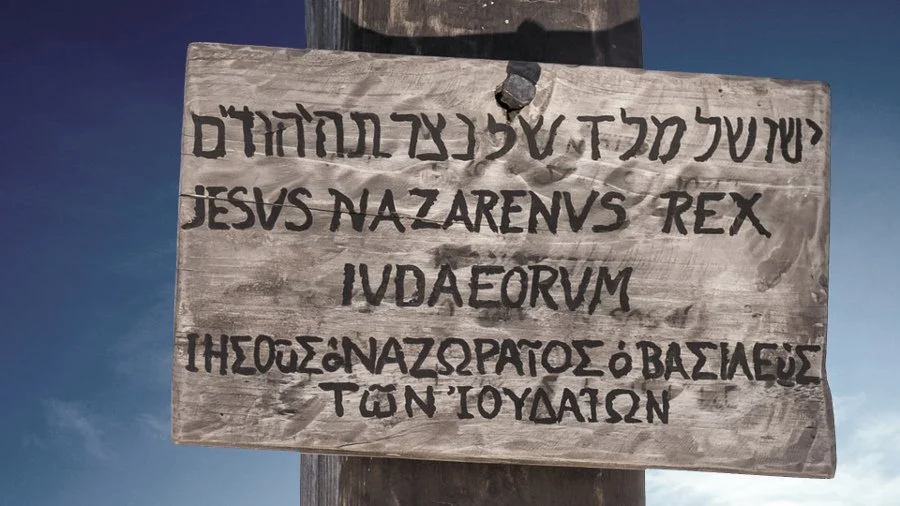
In the middle of them hung Jesus. Above his head, Rome posted the reason for his execution:
The King of the Jews.
That was not a Christian confession placed upon the cross. It was a Roman charge and a public warning.
A land of would-be kings
Josephus describes the unrest that followed the death of Herod the Great. Several men attempted to take advantage of the uncertainty.
Judas, the son of Hezekiah, gathered followers near Sepphoris in Galilee, seized weapons from the royal palace, and aspired to royal power. Simon of Perea placed a diadem upon his head and was proclaimed king. A shepherd named Athronges also wore a diadem, gathered followers, and was called king.
None established an independent kingdom. Roman or Herodian forces eventually killed or subdued them.
Even Archelaus, whom Herod intended as his successor, would not accept the title “king” until Caesar confirmed his authority. Rome decided who could rule. An unauthorized Jewish king was not simply another religious teacher. He represented a rival claim to authority. Josephus recounts these events in Jewish Antiquities 17.
Jesus enters the royal city
Jesus’ arrival in Jerusalem brought his kingdom proclamation into the city where Roman and priestly power were concentrated.
He had announced the kingdom of God, gathered Israel’s lost sheep, and acted as their promised shepherd. He entered Jerusalem as the crowds shouted royal and Davidic acclamations. He then entered the Temple and disrupted its commerce.
These actions did not amount to an armed revolt. Jesus had not gathered an army, and his followers did not fight to establish his kingdom. But Rome did not need Jesus to command an army before regarding him as dangerous. During Passover, when Jerusalem was filled with pilgrims celebrating Israel’s deliverance from slavery, a popular movement centered on Israel’s coming kingdom could not be politically innocent.
The same mission that led Jesus to gather Israel now made him vulnerable to Rome.
When “Messiah” becomes a Roman charge
Christians use “Christ” so frequently that it can sound like Jesus’ second name. But Christos means “Messiah”—the anointed one of Israel.
Within Israel’s story, the title carried hopes for a Davidic ruler who would gather God’s people and restore God’s reign. Rome did not need to understand all the scriptural promises surrounding Israel’s Messiah. It only needed to hear the royal claim.
Israel spoke of a Messiah. Rome heard “king.”
That is why Pilate’s question is political:
Are you the King of the Jews?
Luke makes the accusation especially clear. Jesus is charged with opposing tribute to Caesar and claiming to be “the Messiah, a king.” Rome does not crucify him for interpreting the Sabbath differently or disputing Pharisaic halakhah. It executes him under the accusation that he claims an authority Rome has not given him.
Paula Fredriksen makes this conjunction—the Roman method of execution and the royal charge above the cross—central to her historical reconstruction in Jesus of Nazareth, King of the Jews.
Rome’s warning
Crucifixion did more than kill someone. It displayed the condemned body in public.
Anyone passing Jesus could read Rome’s message: this is what happens to unauthorized kings. His execution eliminated a perceived threat while warning anyone who might become—or follow—the next claimant to Israel’s throne.
The men beside Jesus reinforced the warning. Rome displayed the “King of the Jews” among others it had judged dangerous to public order. The scene announced that Caesar’s authority remained intact and Jesus’ kingdom had failed.
The Gospels reverse the spectacle
The soldiers dress Jesus in purple, place a crown upon his head, salute him, and kneel before him. They intend a cruel parody of royal honor.
The Gospel writers allow the mockery to stand, but they also reverse it. The soldiers speak more truthfully than they know. The condemned man really is Israel’s king.
Matthew frames Jesus’ life with this title. Near the beginning, the magi ask where the child “born King of the Jews” can be found. Herod hears the question and tries to kill him. Near the end, the same title appears above Jesus’ cross.
From his birth to his death, rulers recognize the danger of another king.
Why Jesus’ Jewishness matters
Christians often hurry from “King of the Jews” to “King of kings.” Jesus is not merely Israel’s king, we say. He is king of everyone.
But that movement can make Jesus’ Jewish kingship sound temporary. The universal Christ replaces the Jewish Messiah.
The Passion narratives do not permit that separation. Jesus does not die as a universal religious teacher who happens to be Jewish. His mission within Israel generates the royal claim under which Rome crucifies him. His Jewishness tells us what his kingship means, why Rome finds it dangerous, and whose story his death brings to its climax.
The universal meaning Christians find in Jesus’ death grows from this particular Jewish story. It does not replace it.
Rome attempted to extinguish the claim. Yet Jesus’ followers continued to announce what Rome could not permit. In Acts, they are accused of defying Caesar’s decrees by saying:
There is another king—Jesus.
What if “King of the Jews” is not a title Christians should hurry past on the way to “King of kings,” but the title that tells us who the King of kings actually is?
In the next Dispatch, we will consider the question Jesus’ disciples ask after his resurrection: “Lord, is this the time when you will restore the kingdom to Israel?”